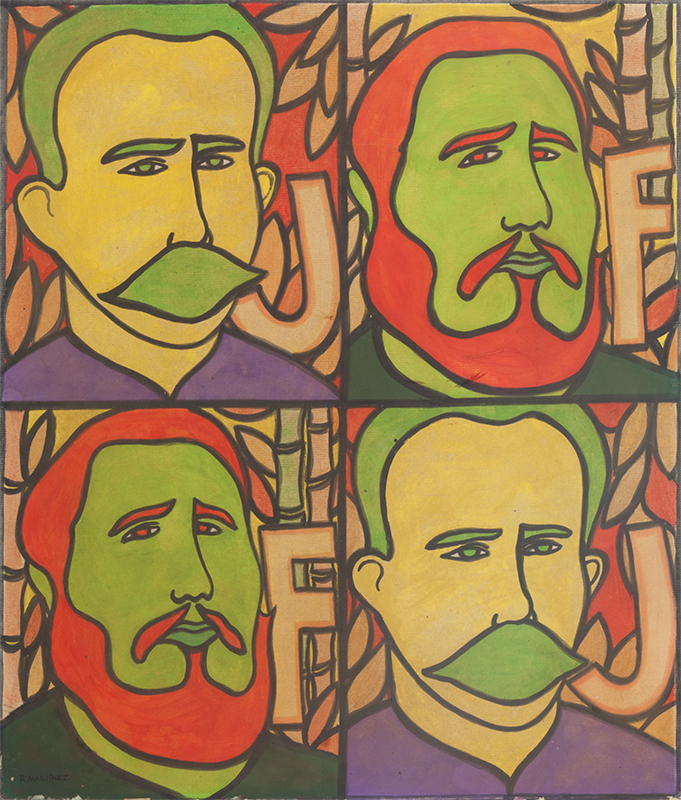
In JF, Raúl Martínez distances himself from the dogmatic aesthetics and the propagandistic sacralization of official art to recreate, with experimental elements derived from Pop art, the iconography of the heroes and leaders of the country’s history. In this work, the artist irreverently portrays José Martí and Fidel Castro, appropriating popular realism that pays tribute to the assimilation of pop culture language to subvert the apologetic representation of heroes. Martínez uses advertising aesthetics to exalt these political figures as if they were popular icons. The repetition of images of Martí and Fidel, the lively and flat color, the subtle nuances in the treatment of their faces, the reiteration of symbols of Cuban flora, and the incorporation of the initials of the leader’s names seem to have emerged from the spontaneous aesthetics of graffiti. These elements accentuate the expressive intention of the portraits while making the composition more dynamic.
An iconic figure of Cuban art, Martínez moved from the Abstract Expressionism of the 1950s––the stage in which he joined the group Los Once––toward Pop art, of which he would become the most outstanding exponent in Cuba. He was the creator of a multifaceted practice as a magazine and book designer, painter, and photographer, standing out in poster design and theatrical scenery.
En JF, Raúl Martínez se desmarca de la estética dogmática y la sacralización propagandística del arte oficial para recrear, desde una experimentación derivada del pop art, la iconografía de los héroes y líderes de la historia patria. En la obra, el artista retrata de manera irreverente a José Martí y Fidel Castro, apropiándose de un realismo popular que rinde homenaje a la asimilación del lenguaje pop para subvertir la representación apologética de los héroes. Martínez recurre a la cultura popular y a la estética publicitaria, estrategias que incorpora para exaltar a estas figuras políticas como si de íconos populares se tratara. La repetición de las imágenes de Martí y Fidel, el color vivo y plano, los sutiles matices en el tratamiento de sus rostros, la reiteración de símbolos de la flora cubana y de las iniciales de los líderes parecieran surgidos de la estética espontánea del graffiti. Estos elementos acentuan la intención expresiva del conjuntoal tiempo que dinamizan la composición.
Figura icónica del arte cubano, Raúl Martínez transita del expresionismo abstracto de los cincuenta (etapa en que integró el grupo Los Once) hacia un pop art del que resultaría máximo exponente en Cuba. Fue creador de una multifacética obra como diseñador de revista y libros, pintor y fotógrafo, destacándose también en la cartelística y la escenografía teatral.